What Is the Primordial Human in Genshin Impact?
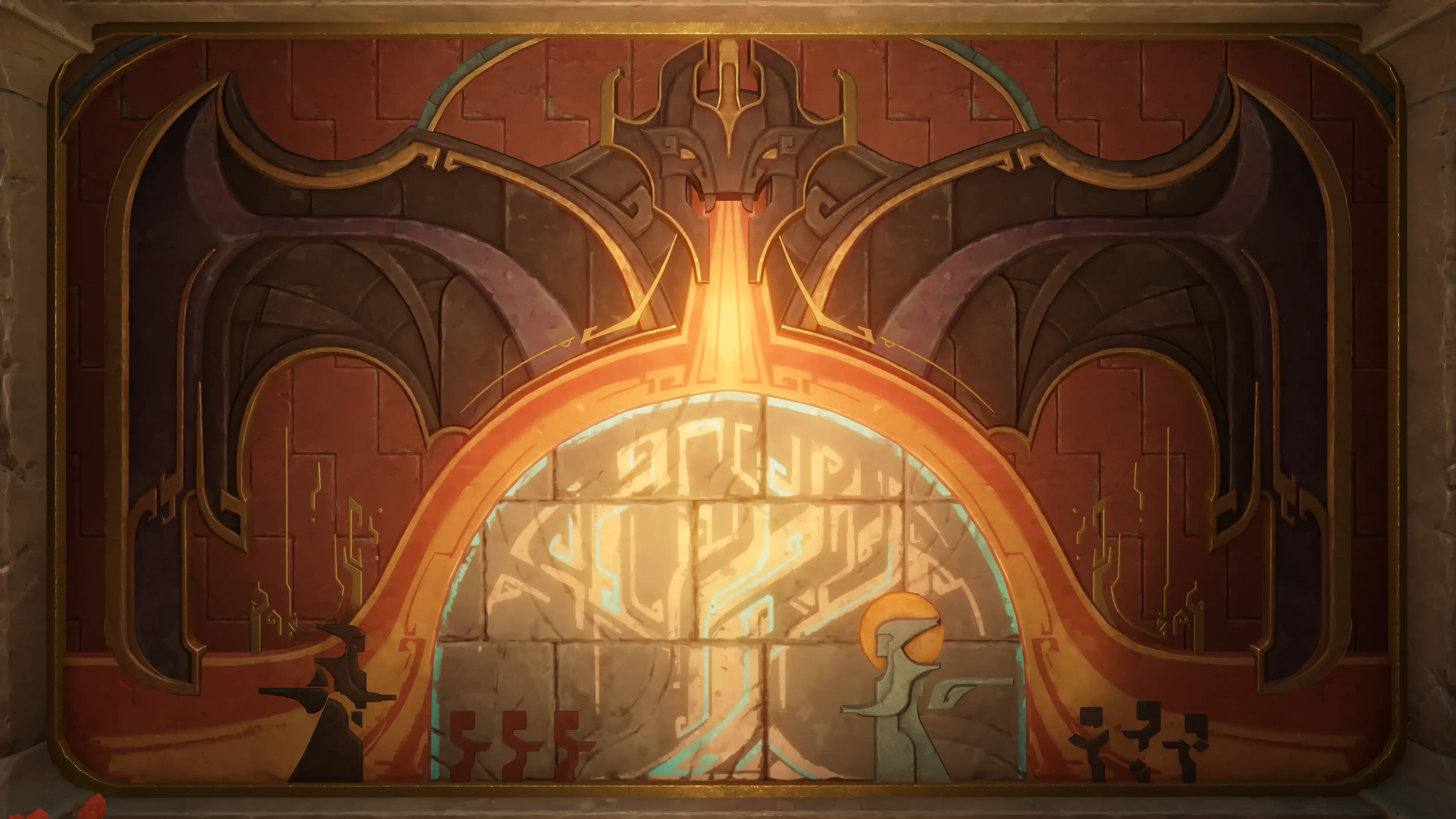
In the Version 6.6 Archon Quest, Nicole tells Collei that Nabu Malikata was an Angel, and that Angels like herself were created by "the primordial humans":
Yes. Just like me, she was an angel created by the primordial humans, born with the instinct to guide living beings.
That contradicts everything the game had said before, since Angels were always attributed to the Heavenly Principles. The term itself isn't new — it first appeared in Version 2.3 through Albedo, expanded through Ajax and the Abyss in Version 4.2, and got a full origin myth in Version 6.5 through Istoria. The Version 7.0 world quest "An Ark That Used to Be a Soul" goes further still, confirming who held the title before anyone else did — and resolving what came of the being built to replace him.
A Translation Problem First
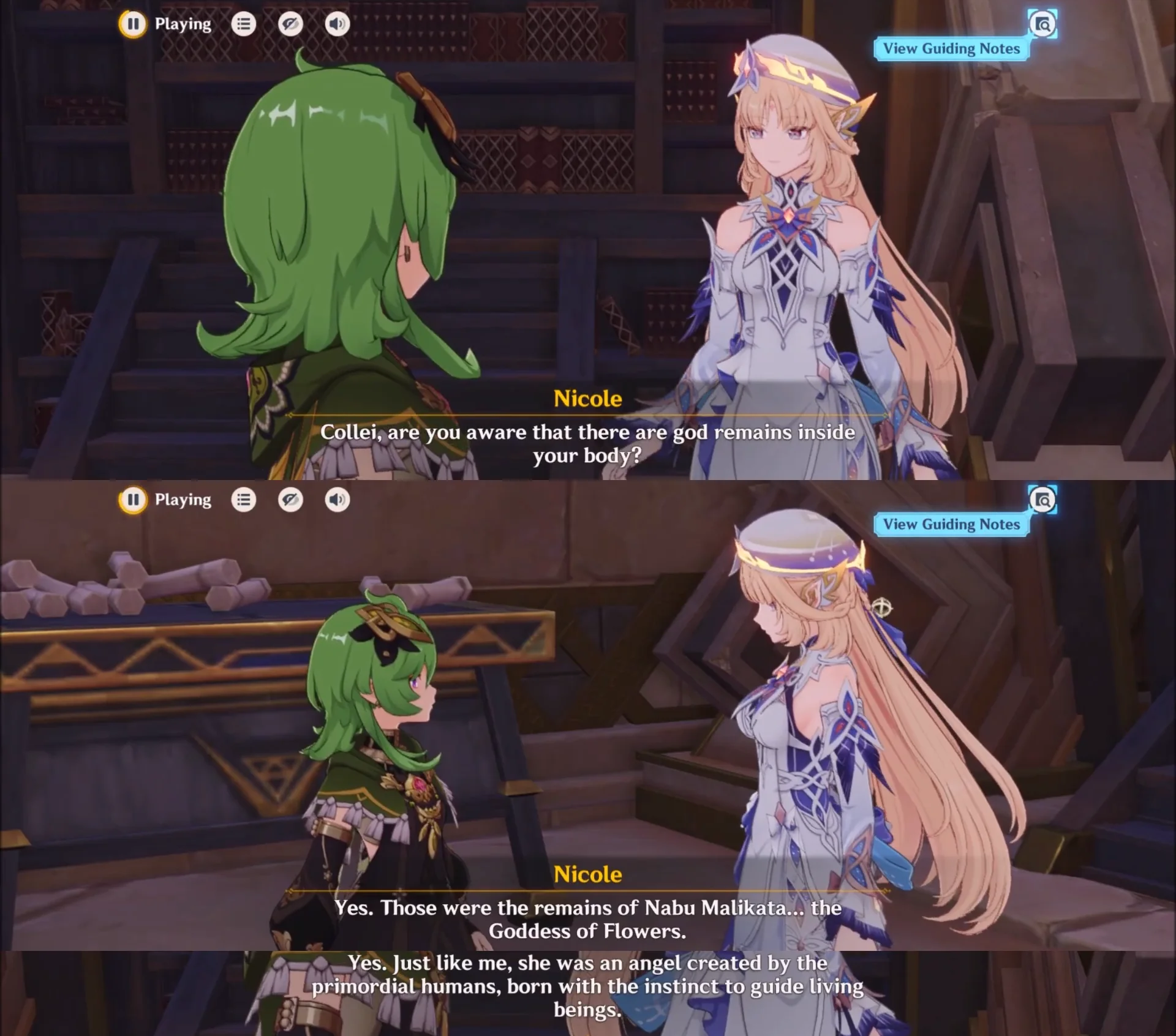
In Chinese, Nicole's line uses "原初之人," which literally translates to "Primordial Human" in the singular, not "primordial humans" in the plural — the French localization also keeps it singular. So the English text is a mistranslation here: Nicole isn't describing a species that made the Angels, she's referring to one specific figure.
The word itself is also disputed. Players comparing it to the same concept in real-world mysticism argue "原初之人" reads closer to "Primordial Being" than "Primordial Human," since the figure isn't necessarily human at all — a conclusion reached independently by multiple players working from the game's Indonesian client text too, not just the Chinese source. Istoria uses the identical term for the heretical myth further below, and the translation stays "Primordial Human" there, so this article keeps using that term throughout while flagging "Being" as the likely more accurate sense.
A Position, Not a Fixed Identity
The Version 7.0 world quest "An Ark That Used to Be a Soul" confirms this directly, not just as outside inference. Aksinya explains:
Aksinya: A will born alongside Teyvat, the master of the Light Realm's power at the very beginning, and the King of all Dragon Lords: Nibelung. Aksinya: Ever since his destruction, the place of Primordial Human, or Narayana, has sat vacant.
Paimon then asks directly: "So that's why they created the Belyi Tsar... But they couldn't possibly have called him that at the time. Did they call him the Primordial Human or something then?" Aksinya confirms that's exactly what Hyperborea was trying to create. It's a seat that can go empty and be fought over, not a fixed identity tied to one character.
It's also separate from "Descender," a different classification for beings whose will is strong enough to rival an entire world — Rene's own notebook draws that line directly:
Rene: "Lies beneath the great sea" is an interesting phrase. It comes from ancient Sumeru texts — the word "Narayana" can be interpreted as "primeval human," or "the first one." ...This is what I'm after, because not everyone who comes from beyond can be called someone who has "descended." Only those whose will is strong enough to rival the world can be called Descenders. This is what I seek: a way to forge that kind of will, one that can protect, sustain, destroy, and create the world.
Albedo, for instance, is confirmed as a Primordial Human but not a Descender. Monomakh (the Belyi Tsar) is read as a Primordial Human without being a Descender either — different seats, but the same split Rene draws.
Where the Concept Comes From
The idea has real-world roots in what's sometimes called the "Cosmic Man" archetype: Adam Kadmon in Kabbalah, Narayana and Purusha in Hindu and Vedic tradition, Ymir in Norse myth — figures who aren't literal humans, but the first manifestation of existence itself, described in human-like terms mostly as narrative shorthand. Adam Kadmon specifically appears after God's Infinite Light contracts to make room for creation and serves as the blueprint for everything made afterward. An early theory used this parallel to argue the Heavenly Principles themselves were the Primordial Human, since they occupy a similar role above the world — Aksinya's dialogue above points somewhere else instead.
Nibelung, the First to Hold the Seat
Aksinya's dialogue above already confirms it: Nibelung — "a will born alongside Teyvat, the master of the Light Realm's power at the very beginning, and the King of all Dragon Lords" — is the Primordial Human whose destruction left Narayana's seat vacant. Elsewhere, Nibelung ruled Teyvat before the Heavenly Principles' arrival, then left for the sea of stars to search for a way to fight the Abyss, entrusting the Three Moons to govern in his place. He eventually returned during the Funerary Year — Nicole calls it "the war of funerary flame, a battle for dominance between Nibelung and the Heavenly Principles" — and was killed by them roughly 6,000 years ago, though at "great cost" to the Heavenly Principles' own strength. That's the destruction Aksinya's dialogue refers to. Rene's notebook (quoted above) is chasing that same seat under its Sumeru name — and "primeval human" or "the first one" fits the "Being" translation raised earlier better than a literal "human" would.
It's worth being precise here: "Primordial Human" is not the same title as "Primordial One." The latter belongs to the Heavenly Principles themselves, confirmed to be the same entity as Phanes. The two names share a root and a similar theme — something whose existence predates and outranks everything else — but they're tracked as distinct titles: Nibelung/Narayana holds "Primordial Human," while Phanes/the Heavenly Principles holds "Primordial One" and "First Descender" instead. Whether, or how, those two titles connect is exactly what the heretical myth theories below try to answer, and none of them are confirmed.
Belyi Tsar and the Eye of Graeae

Monomakh was Hyperborea's attempt to fill that vacant seat, forged from the flesh and blood of the Primordial Cryo Dragon to give him authority equal to Nibelung's — Aksinya calls it an attempt to "create their own gods." The experiment went out of control: the corpse's unchecked authority is what turned all of Snezhnaya into "the Holy Soil of primordial ice," destroyed Hyperborea's Golden City, and only stopped once the Heavenly Principles "witnessed this and sent their heavenly nail crashing down" to contain it.
Aksinya: It spun out of control, but it was not a failure... A thousand years after that experiment and its cataclysmic impact finally cleared, His Majesty awoke from the remains of the Cryo Dragon.
By then, Hyperborea itself had already sunk into the Shadow Realm. Aksinya is explicit that the transformation was never finished: "His power was not fully complete, as the experiment was never brought to its conclusion." Belyi Tsar accepted this himself — Aksinya says he "accepted that he was the failed product of the Primordial Human project," while remaining willing to "become the true Primordial Human."
That unfinished business turns out to be the actual plot of "An Ark That Used to Be a Soul." The Eye of Graeae — a construct Paimon nicknames "Goggles," built through "countless experiments" — turns out to be "the Key that would allow His Majesty to become the Primordial Human." Using fragments of the Eye of Graeae the Traveler and Paimon had gathered, Aksinya completes the fusion: its consciousness merges with what remains of Belyi Tsar, and a being that calls itself "Primordial Human" wakes up, carrying both of their memories. The Traveler and Paimon then fight and stop Aksinya and this newly-formed Primordial Human before their larger plan — remaking the world into something called the "Courtyard of Carefree Light" — can be carried out. In the quest's closing scene, both the Primordial Human and Aksinya fall into the depths of the Shadow Realm together, and neither is seen again.
Phanes and the Heretical Myth
Phanes' confirmed title is "Primordial One," not "Primordial Human" — but a separate myth, recounted by Istoria in Version 6.5, is what community theories lean on to connect the two anyway:
It tells of the god of light who created a body in its own likeness, only for it to be stolen away by the king of darkness. Thus, within that single body, the powers of light and darkness began to contend with one another. And so the primordial human, bearing both, came to possess both good and evil.
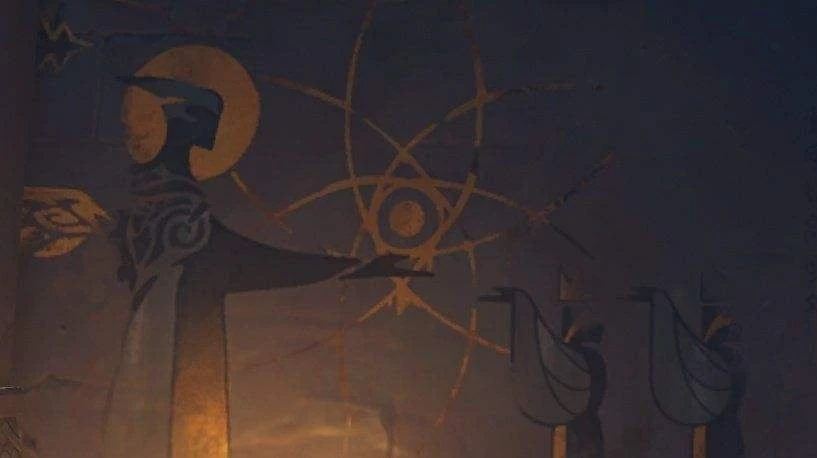
One theory ties this to Phanes directly: Nibelung as the "god of light" who left a body in his own image on Teyvat, and the Heavenly Principles as the "king of darkness" who took possession of it, with Phanes as the being that resulted. A competing theory reverses the pairing — Phanes as the god of light (equated with the Heavenly Principles) and Nibelung, after his corruption, as the king of darkness — partly because Phanes reportedly interacted normally with the Moon Goddesses before Nibelung's return, which sits awkwardly with a body-theft origin. A third, older theory skips the myth entirely and makes Phanes a clone of Aether and Lumine instead. None of the three has a quote confirming it outright, which makes Phanes the least settled figure in the whole topic.
Other Figures Tied to the Seat
Saarelainen, the Third Descender. Rene's notes tie the Narayana seat to the legend of Ajax by way of ancient Sumeru texts, paired with the Narzissenkreuz Notes' description of "forsaking the self and sinking into the abyss... to welcome rebirth as a holy infant." Fragments about an "innocent" accepted alongside the Belyi Tsar's Cryo Gnosis point to Saarelainen — later confirmed as the Third Descender, killed by the Heavenly Principles in Pohjola — as the being that resulted, though that specific Primordial Human connection is Rene's own inference, not a separate confirmation.
Deshret, Remus, and Rene. Each pursued the same title on their own — Deshret merging his darkness with the Dendro Sovereign's light before letting himself be devoured by Apep, Remus combining Primordial Water with an immortal stone to sever soul from body, and Rene chasing the same "rebirth as a holy infant" through Sumeru's research and Ajax's legend. All three read as failed attempts rather than confirmed successes.
Albedo, Rhinedottir's Primordial Human Project
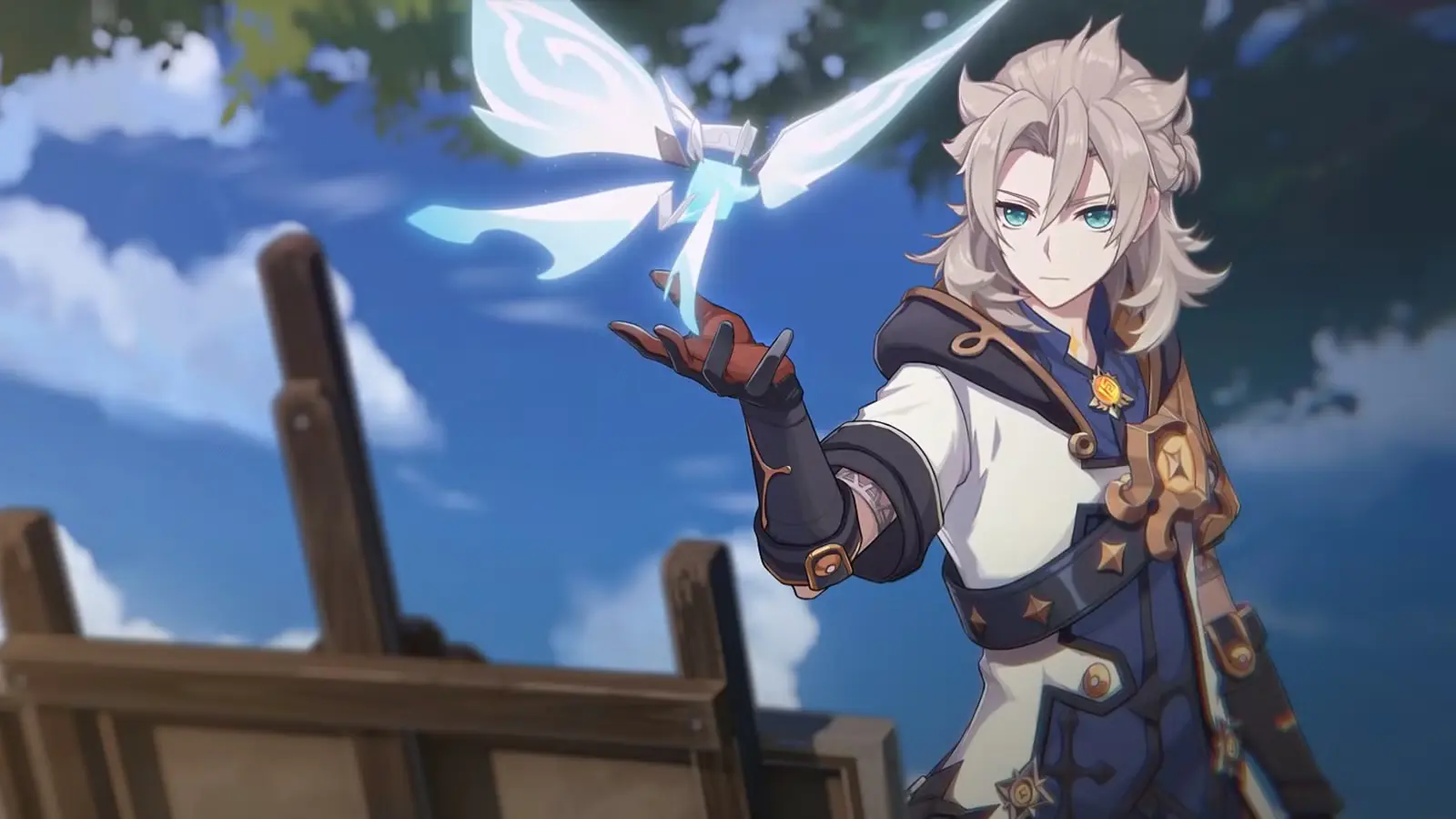
Albedo is the confirmed result of Rhinedottir's "Primordial Human Project," made with the Art of Khemia after her earlier experiments produced Abyssal creatures like Rift Wolves and Durin — most likely triggered by Rhinedottir witnessing the Abyss Sibling and trying to replicate that nature artificially. Nicole's voice-over about Albedo adds a piece the other sources don't have:
In another converged possibility, Albedo was the "Primordial Human" who traveled through worlds, recording and creating all. However, once that journey reached its end, no one would have been able to guarantee whether he would choose destruction or salvation. Luckily, you're the one who embarked on the journey this time. Hm? How did the alternate Albedo fare? I can no longer observe that possibility. Besides, copying someone else's answer is of little use. This journey is your own.
That describes an alternate timeline where Albedo, not the Traveler, carried out the Traveler's current role — and calls that alternate Albedo a "Primordial Human."
The Traveler and the Abyss Sibling
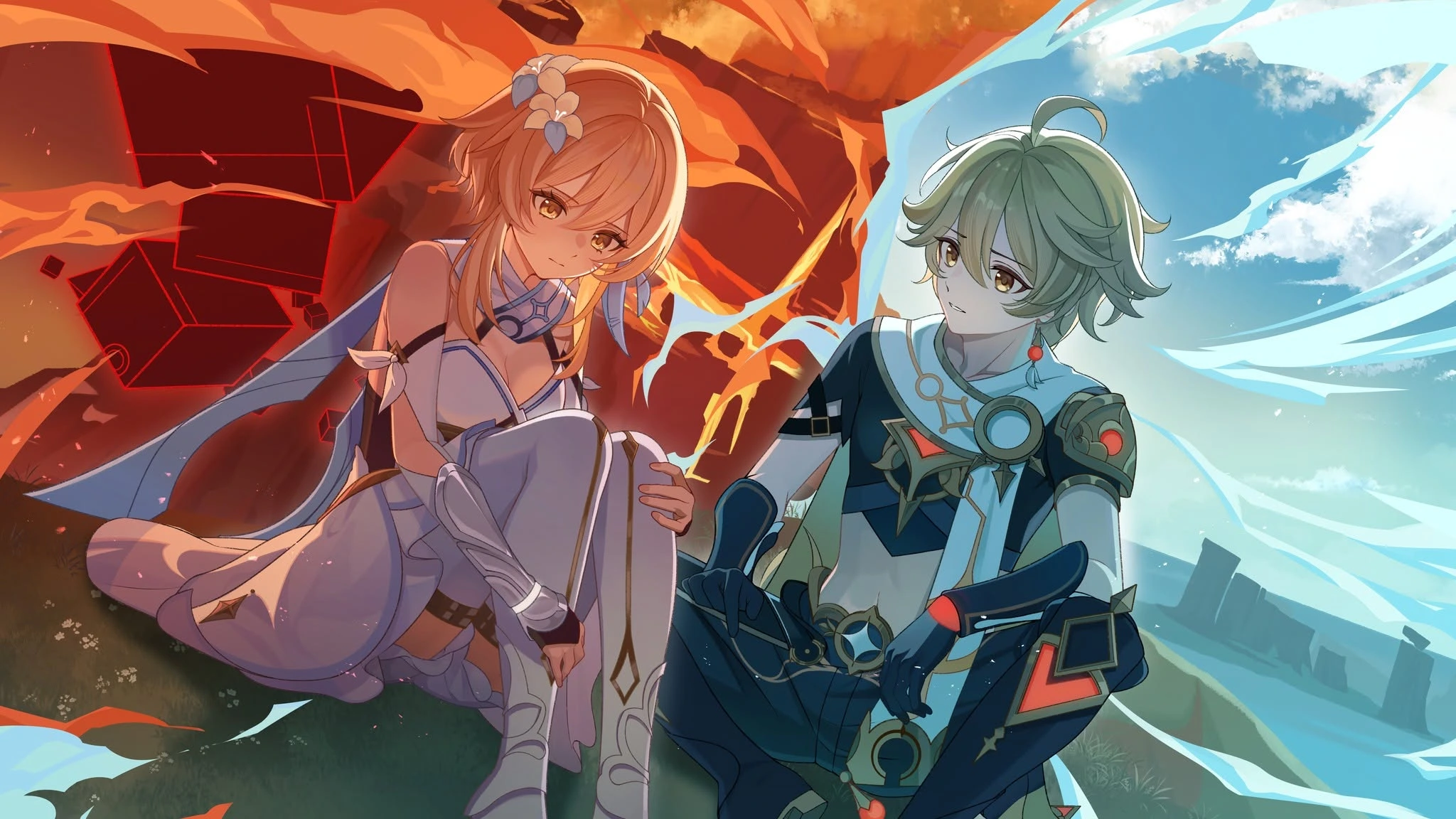
Nicole's line — "luckily, you're the one who embarked on the journey this time" — puts the Traveler in the role an alternate-timeline Primordial Human would have filled. Albedo draws the same comparison directly:
Those born of earth are bound by its imperfections, but those born of chalk are free of impurities... You and I are alike, both composed of a substance that has yet to be fully defined...
One theory, unconfirmed, reads the Traveler and the Abyss Sibling as the two halves of a light-and-darkness fusion, rather than either twin alone qualifying as a Primordial Human on their own.
What's Confirmed, and What Isn't
The game now confirms "Primordial Human" (or, more precisely, Narayana) as a position rather than a species or a single character — Nibelung held it, was killed by the Heavenly Principles in the war of funerary flame, and Hyperborea then tried and failed to fill that vacant seat, leaving Belyi Tsar an incomplete heir until "An Ark That Used to Be a Soul" lets him finally complete that transcendence, fused with the Eye of Graeae, at the cost of both vanishing into the Shadow Realm. It's also confirmed to be a different title from "Primordial One," which belongs to Phanes and the Heavenly Principles instead. What's still genuinely contested is everything downstream of that: whether those two titles are even meant to connect, who's cast as light and who's cast as darkness in the myth tied to Phanes, and where the Traveler fits into a seat that's been fought over for this long. Nicole calling the Angels' creators "the primordial humans" fits a world where more than one being has held that title — it just doesn't settle, on its own, which ones.